
"Tropical fruit Taiwan"
500 article(s) found

Coffee is just the consumption of life! It's not coffee with no future, it's boutique coffee with no future.
Professional barista communication please follow the coffee workshop (Wechat official account cafe_style) in 1993, when I went to the Muzhang International Food and Beverage equipment and Food Exhibition in Tokyo, Japan, I saw the development of Japan's own baking industry at that time. I was very impressed by Bonmac's idea of automating the process of baking (baking) in the exhibition. I bought it at Yonghan Bookstore when I returned to Taiwan.

A brief talk on Coffee from China and the United States-Coffee dancers, how to change is a boutique-Guatemala
For the exchange of professional baristas, please pay attention to the coffee workshop (Wechat official account cafe_style). The size of Guatemala is only three times larger than that of Taiwan, but it is rich in natural resources, which makes Guaguo coffee very amorous. The common tonality is elegant and lively, clean and layered, with green malic acid, jasmine, orange peel, green pepper, cocoa and some full-bodied smoke after rhyme.

Introduction of 990 + Red Honey Fine Kiss Coffee Bean processing manors in French producing countries
90 + Honey Kiss Coffee was introduced in 2009 when it was named nectar from Shakisso. The image of Nekisse is usually defined as a creamy taste and a strong jam flavor, but multi-layered citrus flavor and tropical fruit flavor can also be tasted in it. The earliest Nekisse came from Shakisso, and later batches of Nekisse were also grown in Wellega and Sidama.

Introduction to the History of Coffee Tree species History of Botany
In fact, the Arabs began to grow coffee in 525 BC, and chewing fried coffee beans became popular in the Arab region. In 890 AD, Arab merchants sold coffee beans to Yemen, and Yemenis made coffee beans into drinks for the first time. In the 15th century, coffee was introduced into Europe, Asia and soon into America. By the 18th century, species were widely distributed in tropical and subtropical regions of the world.

2016 Costa Rica Excellence Cup winner Shumawa Manor Information unique Sweet Juice treatment
For the exchange of professional baristas, please follow the coffee workshop (Wechat official account cafe_style) 2016 Costa Rican champion Shumawa Manor-La Della batch! She comes from the El Chayote reserve in the western valley. Under the fertile volcanic soil of Pos, convection and moisture in the Pacific Ocean, low temperature difference in the morning and evening and excellent microclimate, four small areas with a radius of one kilometer have been born.

To show you the true face of coffee.
Small and round dark brown coffee beans, quietly emitting a fragrant fragrance in the grinder, injected into the cup showing the beautiful color of amber, these are the three very deep impressions of coffee. As you explore the history and beauty of coffee, you can also see the coffee trees that are caressed by the tropical sun and whose leaves twinkle. It has small white flowers similar to jasmine.

How to bake elephant beans in Storm Manor of Nicaragua _ flavor characteristics of Malagogippe coffee beans
Professional coffee knowledge exchange more coffee bean information please follow the coffee workshop (Wechat official account cafe_style) Nicaragua Finca La Tormenta Maragogype Natural Nicaraguan Coffee Storm Manor Sun Elephant Bean production area: Buenos Aires, Dipilto (about 1500m above sea level) varieties: elephant bean Maragogype treatment: sun flavor: ripe fruit
Detailed introduction of Sidamo G1 Coffee Bean Red Cherry Project (OCR) in African Coffee producing area
The following information is from the Taiwan Coffee blog Organic Coffee blog: the Red Cherry Project (Operation Cherry Red) is a small-scale farm quality improvement project led by Dutch trading company Trabocca BV and partly funded by the Dutch government since 2005. This enhances coffee in remote areas of Ethiopia by providing assistance to producers' expertise and related technology.
Talking about Coffee beans
1. Summary: coffee is a perennial evergreen shrub or small tree of Rubiaceae. It is native to tropical Africa and has been cultivated for more than 2000 years. The Arabs began to grow coffee in 525 BC, and it was popular for Arabs to stir-fry coffee beans. They began to grow coffee beans on a large scale after the 15th century, and were widely distributed in the tropics and subtropics of Europe, Asia, Africa and Latin America after the 18th century.

Introduction to the production area of grinding scale of Arabica Nicaraguan coffee bean flavor description treatment method
Introduction of Arabica Nicaraguan Coffee Bean Flavor description method Grinding scale production area Nicaraguan Ambassador to China William M. Tapia pointed out that at present the annual output value of Nicaraguan coffee has reached 370 million US dollars. Due to the proper control of leaf disease and the implementation of better planting and harvesting programs, this year has become a bumper year for coffee harvest. Nepal Coffee, which is famous for its quality, has continued to launch innovative varieties of coffee in recent years.

Types and characteristics of coffee beans how many kinds of coffee beans are there
Coffee trees are small shrubs growing in tropical highlands. Their fruits are red or yellow. The seeds inside are what we call coffee beans. At present, coffee beans are grown in about 66 countries in the world, among which they can be classified as Arabica, Robusta and Liberica. Arabica is the largest major variety of coffee beans, accounting for about 80% of its aroma and quality. And Robusta
A brief talk on understanding coffee beans
1. Summary: coffee is a perennial evergreen shrub or small tree of Rubiaceae. It is native to tropical Africa and has been cultivated for more than 2000 years. The Arabs began to grow coffee in 525 BC, and it was popular for Arabs to stir-fry coffee beans. They began to grow coffee beans on a large scale after the 15th century, and were widely distributed in the tropics and subtropics of Europe, Asia, Africa and Latin America after the 18th century.

Guatemala Vivetna fruit producing area coffee Vivetna fruit Guatemalan coffee producing area
The Republic of Guatemala (Spanish: Repblica de Guatemala), translated by Taiwan as Guatemala, is a country in Central America, located in the south of the North American continent. It borders the Pacific Ocean to the west, the Caribbean Sea to the east, Mexico to the north, Belize to the northeast, and Honduras and El Salvador to the southeast. Located in the tropics, the northern and eastern coastal plains are tropical.

How long does it take to grow coffee?
How long does it take for coffee to grow? coffee trees can blossom in a few years, and when coffee trees blossom and bear fruit will be introduced to you by the editor. Coffee tree opposite leaves are long oval, smooth leaves, the end of the branch is very long, few branches, and the flowers are white, open at the base of the petiole connecting the branch. In fact, the Arabs began to grow coffee in 525 BC.
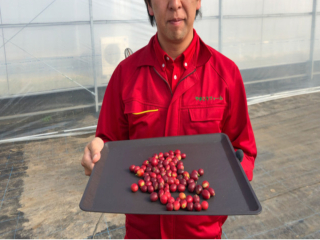
Coffee beans grown locally in Japan are sold in advance! The price... At least not by one!
What?! When did Japan become a coffee producing area? On this matter, we will recall that last month, Yamako Farm in Okayama City, Japan announced that the coffee tree they planted was not only alive! It also blossomed and bore fruit, and the coffee fruit is in the ripening stage. The head of the farm said that the coffee fruit
Types and characteristics of coffee beans
Coffee cherry varieties: Arabica species Libica species Romstar species Coffee bean varieties: Blue Mountain Mocha Brazil Santos Colombia Mandelin Guatemala Romstar complex Coffee trees are small shrubs growing in tropical highlands. Their fruits are red or yellow, and the seeds inside are what we call coffee beans. Coffee is grown in 66 countries worldwide.

Correct identification of the world's three major coffee tree species: Arabica and Robusta and Liberia
Professional coffee knowledge exchange more coffee bean information please pay attention to coffee workshop (Wechat official account cafe_style) Coffee was used by Yemenis in southwestern Arabia as early as 575, and it was consumed in Western Europe around 1615. Coffee was popular in continental Europe in the early 17th century. Coffee grew mainly in the tropics or subtropics of America, Africa and Asia.

Coffee bean varieties Coffee machine detergent
Coffee trees are small shrubs growing in tropical highlands. Their fruits are red or yellow, and the seeds inside are what we call coffee beans. At present, there are about 66 countries in the world to grow coffee beans, which can be classified into Arabica, Robusta, Liberica three kinds, Arabica is currently the largest group of major coffee bean varieties, the yield of about 80% of its flavor, quality are excellent. and

The History of Coffee trees what are the environmental requirements for planting coffee trees
In fact, the Arabs began to grow coffee in 525 BC, and chewing fried coffee beans became popular in the Arab region. In 890 AD, Arab merchants sold coffee beans to Yemen, and Yemenis made coffee beans into drinks for the first time. In the 15th century, coffee was introduced into Europe, Asia and soon into America. By the 18th century, tropical and subtropical regions around the world were widespread.

How long does it take for coffee trees to blossom to mature coffee berries?
How long does it take for coffee trees to blossom to mature coffee berries? Therefore, it presents different fragrant, dry, mellow, bitter and sour tastes. A master baker must have the temperament of an artist and the rigor of a scientist. Only in this way can we ensure that the sugars and other carbohydrates contained in the coffee are carbonized during the baking process, thus producing the well-known coffee oil and producing high quality.